Begin with the question you need to answer
Decide what your team needs to know: whether a machine is running, when electricity use rises, or when a pump stops communicating. These questions define the required signals and sampling intervals more usefully than a port count alone.
Daily energy totals and brief machine-stop events need different levels of detail. Agree the time resolution with the people using the data before selecting hardware.
Inventory equipment and available interfaces
List PLC, meter and sensor models together with the interfaces and protocols that are actually enabled. An Ethernet socket does not, by itself, confirm Modbus TCP support.
Modbus uses client/server communication. You also need the equipment documentation to identify accessible registers, data types, units and scaling. Connecting the cable is only the first step.
- Obtain model-specific manuals and register maps
- List the readings and display units you need
- Have the equipment owner agree access and a test window
Plan for connectivity and outages
Use an approved site LAN or test cellular coverage at the intended installation point. A metal cabinet and antenna position can make results different from a test in the office.
Ask how readings are buffered during an outage, what duration is supported at the selected point count and sampling rate, and how original timestamps are retained after reconnecting. Two SIMs alone do not establish uninterrupted data in every situation.
Pilot readings you can verify
Start with a small equipment group where the team can check a reference value. Compare the cloud reading with the device display at the same time, recording units, scaling, timestamps and gaps.
After values are correct, test a planned network interruption with the site owner’s approval. Check the historical data after reconnection and record acceptance criteria beyond a status light.
Make the quotation specific
Separate hardware, cloud subscription, SIM, accessories and installation. Identify the offered model and actual port requirements, including any PLC or meter configuration work.
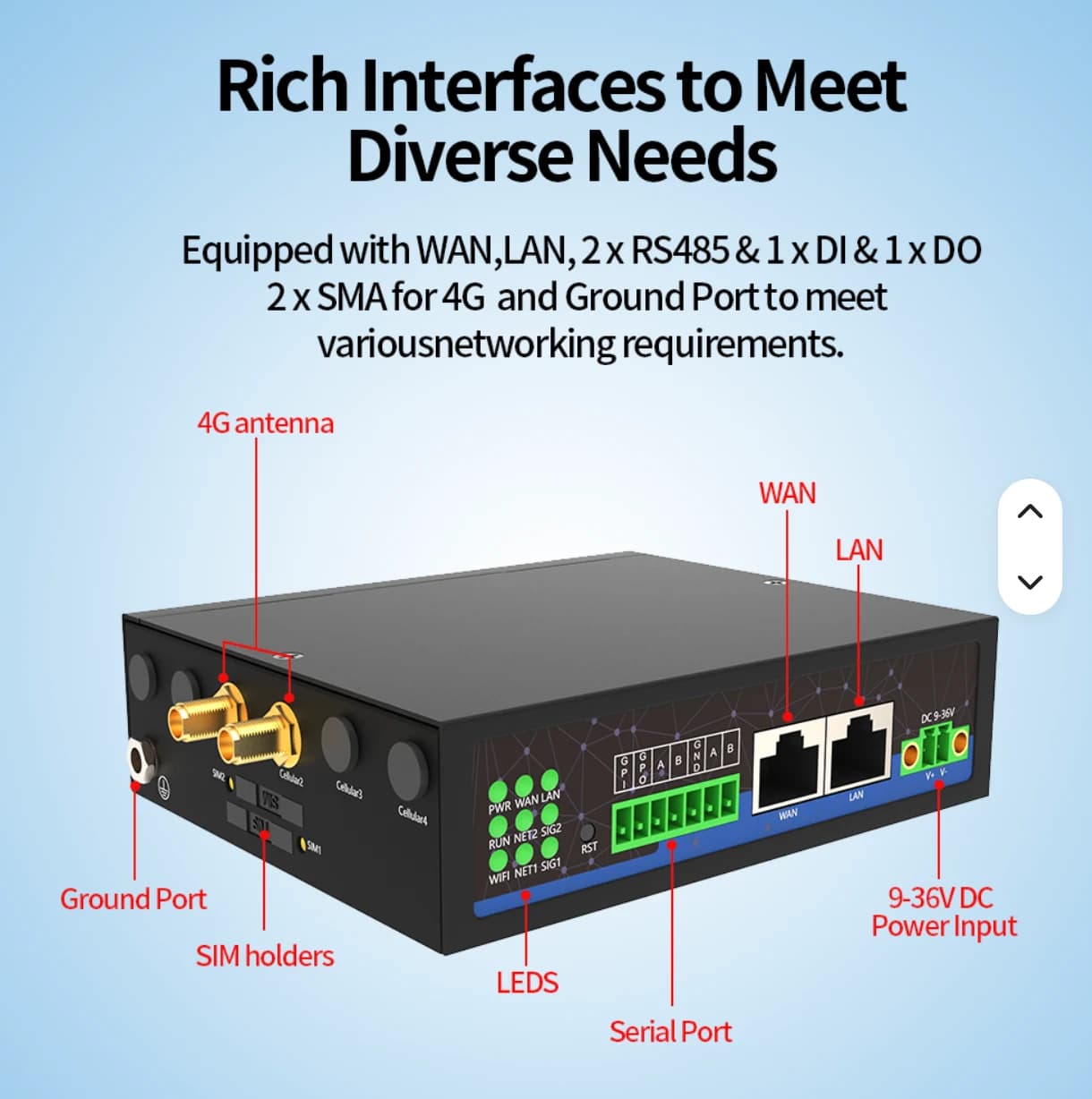
AIoT Gateway is designed around Modbus RTU, Modbus TCP and digital-input acquisition. Confirm each model’s supply, temperature limits and interfaces against its datasheet and quotation.
- Gateway and point counts per site
- Agreed sampling and retention
- Network ownership and site acceptance responsibilities